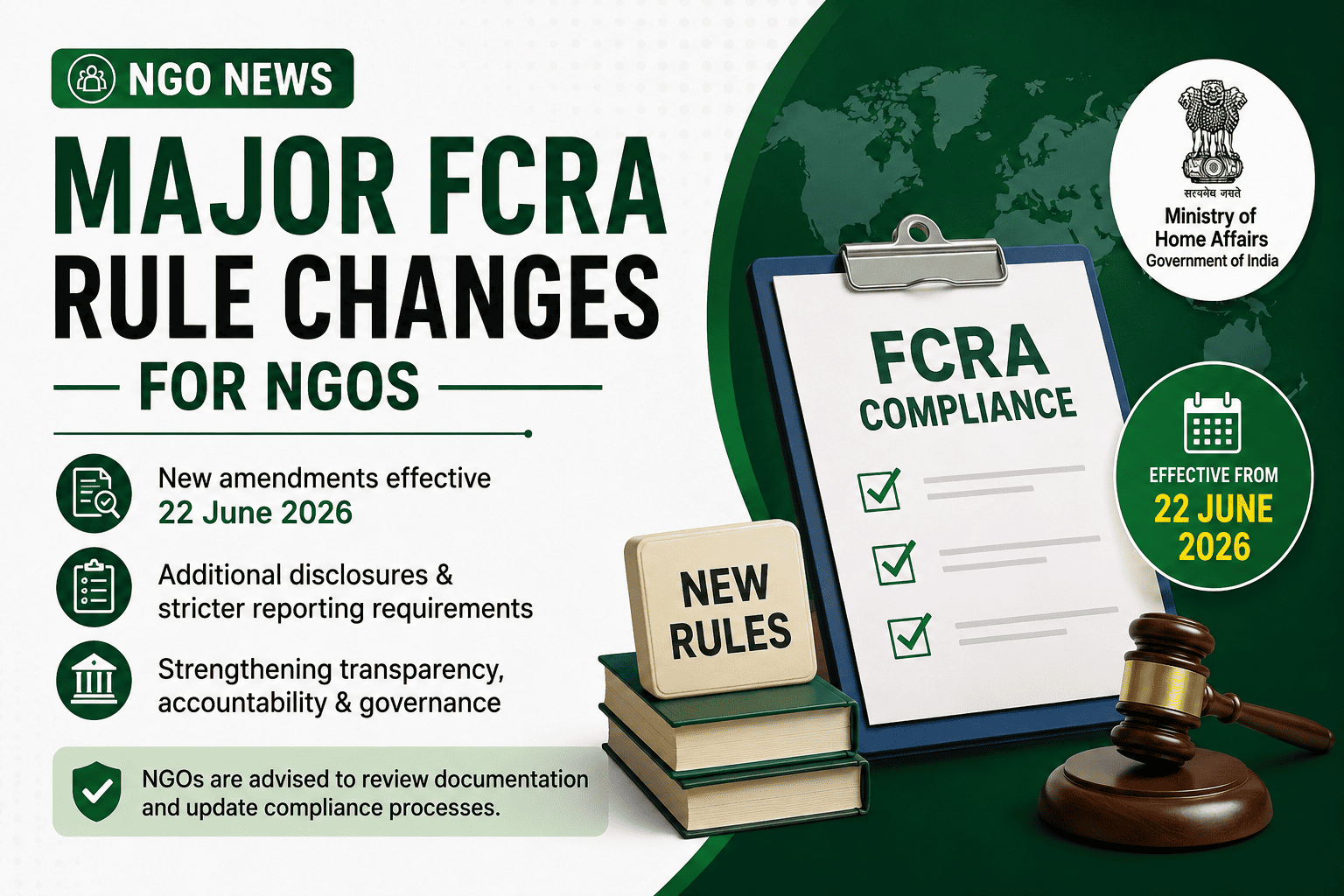
As the nonprofit sector continues to evolve, effective governance has become one of the most important factors in building a credible, transparent, and sustainable organization. Donors, corporate CSR partners, government agencies, and funding institutions are increasingly looking beyond project implementation to evaluate how an NGO is managed and whether it follows strong governance and accountability practices.
In today’s funding environment, organizations with well-defined governance systems are generally better positioned to secure financial support, build long-term partnerships, and maintain compliance with statutory regulations. Strong governance not only enhances public trust but also ensures that resources are managed responsibly and utilized for their intended social purpose.
Experts in the development sector encourage NGOs to regularly review and strengthen their governance framework by adopting transparent policies, improving financial oversight, and implementing efficient management systems. Investing in good governance enables organizations to minimize operational risks, improve decision-making, and demonstrate accountability to donors and beneficiaries alike.
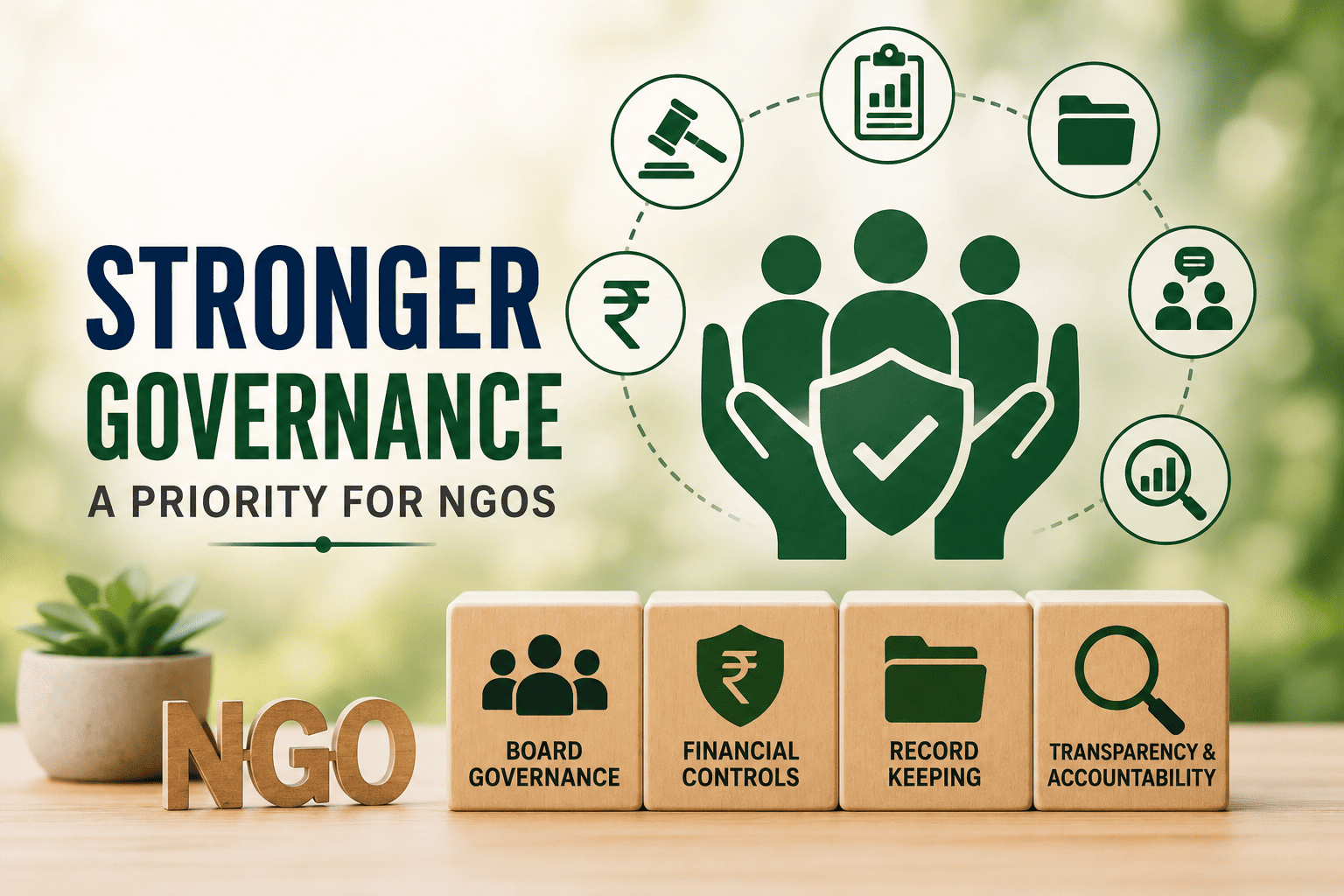
Key Governance Areas Every NGO Should Strengthen
Board Governance
An active and responsible governing board plays a critical role in guiding an organization’s mission and strategic direction. Regular board meetings, documented decisions, clearly defined roles and responsibilities, and adherence to ethical practices help strengthen institutional leadership and accountability.
Internal Financial Controls
Sound financial management is essential for ensuring transparency and preventing errors or misuse of funds. NGOs should establish clear financial policies, maintain proper approval processes, conduct periodic internal reviews, and ensure that all financial transactions are accurately recorded and supported by documentation.
Digital Record Management
Maintaining digital records has become increasingly important for operational efficiency and regulatory compliance. Organizations should securely store financial documents, donor records, project reports, beneficiary data, meeting minutes, and statutory filings using reliable digital systems to enable easy retrieval and long-term preservation.
Annual Reporting
Preparing comprehensive annual reports helps demonstrate an NGO’s achievements, financial performance, project outcomes, and future plans. Well-structured reports improve transparency, strengthen stakeholder confidence, and showcase the organization’s impact to donors, government agencies, and the general public.
Effective Donor Communication
Maintaining regular communication with donors helps build long-term relationships based on trust and transparency. NGOs should provide timely project updates, utilization reports, success stories, newsletters, and impact assessments that clearly demonstrate how donor contributions are creating positive change in communities.
Monitoring and Evaluation Systems
A robust monitoring and evaluation (M&E) framework enables organizations to measure project performance, track outcomes, identify areas for improvement, and assess overall impact. Collecting accurate data and using evidence-based reporting helps NGOs demonstrate accountability and improve future program planning.
Why Strong Governance Matters
Good governance is no longer viewed as an administrative requirement—it has become a strategic advantage for nonprofit organizations. Funding agencies and CSR partners increasingly prefer NGOs that maintain transparent financial systems, effective leadership, reliable reporting mechanisms, and measurable project outcomes.
Organizations that prioritize governance are often better equipped to attract CSR grants, comply with regulatory requirements, strengthen donor confidence, and deliver sustainable social impact. By continuously improving governance practices, NGOs can enhance their reputation, reduce compliance risks, and position themselves as trusted partners in the development sector.