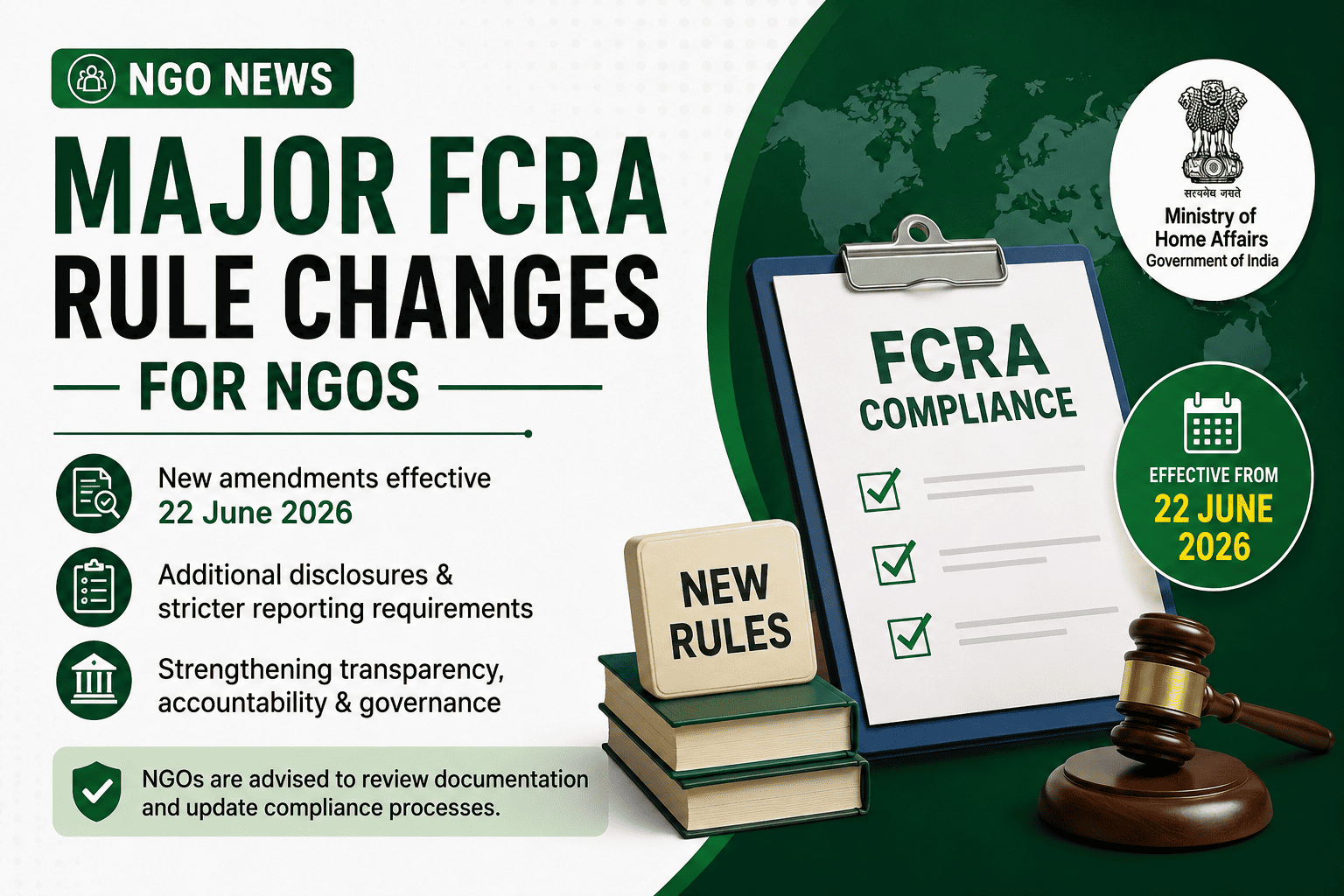
The recent amendments to the Foreign Contribution (Regulation) Rules (FCRA) have increased the focus on regulatory compliance for organizations receiving foreign contributions. While these changes do not alter the Corporate Social Responsibility (CSR) provisions under the Companies Act, 2013, they are expected to influence the way companies evaluate and partner with nonprofit organizations.
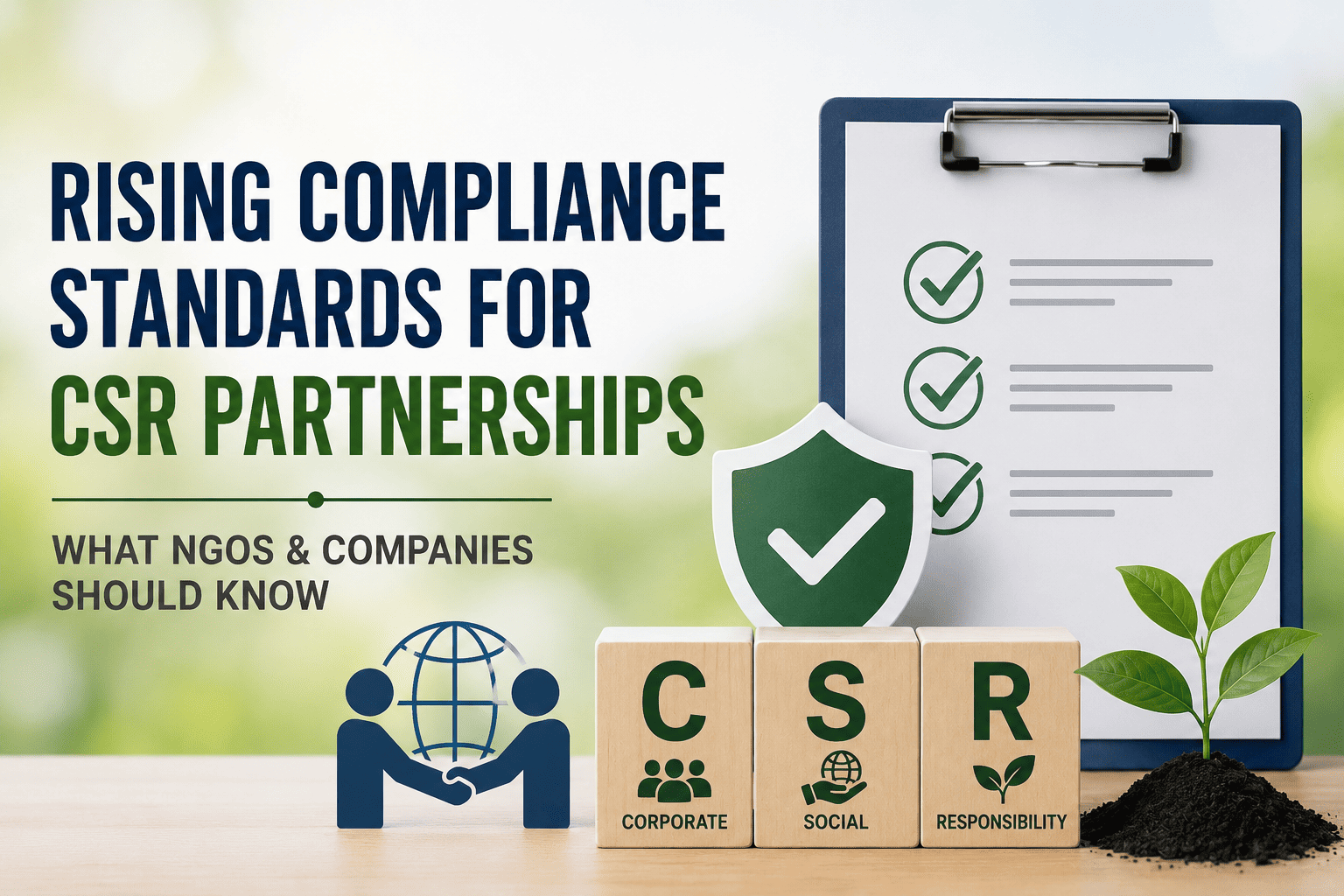
As part of their CSR due diligence, many companies are likely to strengthen their assessment processes before approving grants or entering into partnerships with NGOs, particularly those that receive foreign funding. Organizations may be required to demonstrate robust governance practices, transparent financial management, and compliance with all applicable statutory requirements.
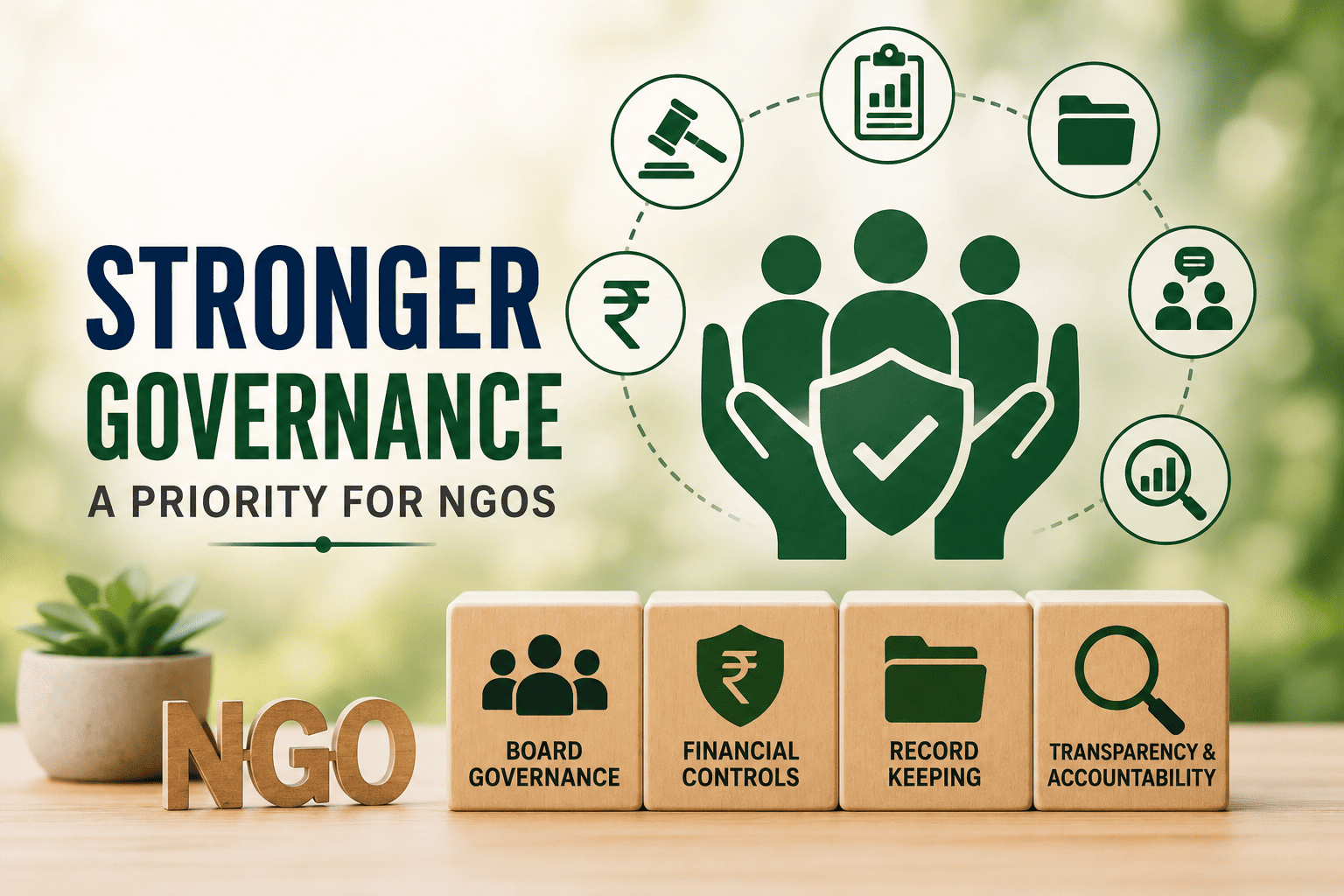
For NGOs, this means maintaining accurate records of financial transactions, keeping statutory registrations and licenses up to date, and ensuring that governance policies are effectively implemented. Proper documentation of project activities, fund utilization, board meetings, audits, and impact reports can help build confidence among CSR donors and funding agencies.
Companies, on the other hand, are expected to place greater emphasis on risk assessment and accountability while selecting implementation partners. They may review an NGO’s legal compliance status, financial health, internal controls, project management capabilities, and previous performance before committing CSR funds. This enhanced scrutiny is intended to ensure that CSR investments are utilized responsibly and generate measurable social impact.
Key Areas NGOs Should Strengthen
- Maintain updated statutory registrations and regulatory filings.
- Ensure complete transparency in accounting and financial reporting.
- Keep project records, utilization certificates, and audit reports well organized.
- Conduct regular board and committee meetings with proper documentation.
- Implement strong internal governance and compliance mechanisms.
- Monitor projects effectively and maintain evidence of outcomes and impact.
- Develop clear policies for procurement, conflict of interest, and financial controls.
Benefits of Strong Compliance
Organizations that maintain high standards of compliance and governance are generally better positioned to attract CSR funding and establish long-term partnerships with corporate donors. Transparent operations not only improve credibility but also enhance donor confidence, reduce regulatory risks, and demonstrate an NGO’s commitment to accountability and responsible fund management.
As the regulatory environment continues to evolve, NGOs that invest in strengthening their governance systems and compliance practices are likely to be more competitive when seeking CSR support and collaborative development opportunities.