New Delhi, August 25, 2026: The Ministry of Social Justice and Empowerment has invited proposals for setting up and operating District Drug De-Addiction Centres (DDACs) in districts identified as having gaps in existing de-addiction services, according to information presented in a recent briefing on the government initiative.
The initiative is being implemented under the National Action Plan for Drug Demand Reduction (NAPDDR) and focuses on strengthening prevention, treatment and rehabilitation services for people affected by drug and substance abuse.
According to the information available in the briefing, the Ministry issued an Expression of Interest (EOI) on August 6, 2026, covering districts where dedicated de-addiction facilities are currently not adequately available.
Focus on Prevention, Treatment and Rehabilitation
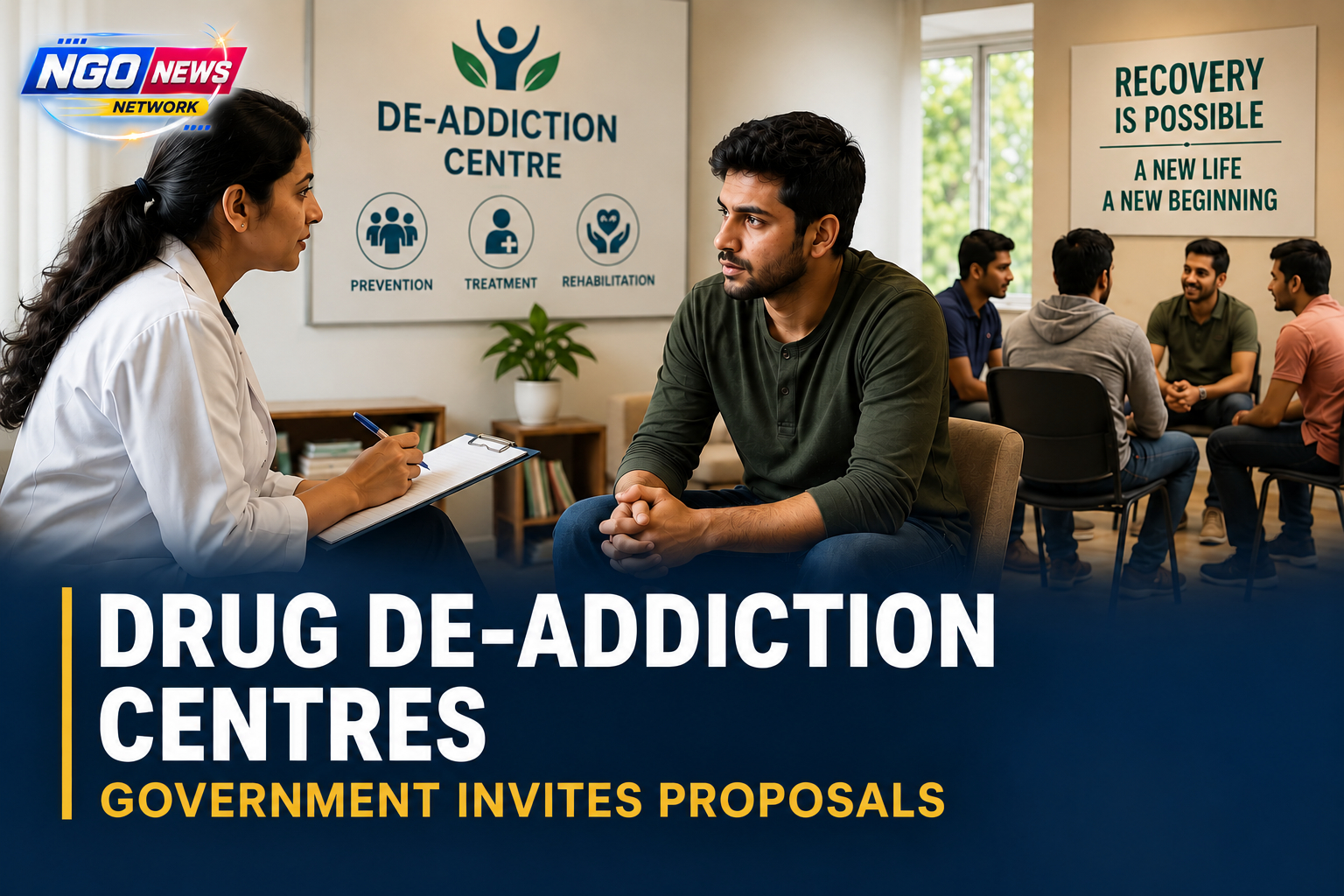
The proposed District Drug De-Addiction Centres are expected to address drug demand reduction through three broad areas: prevention, treatment and rehabilitation.
The prevention component includes awareness programmes, counselling and community-level interventions aimed at preventing people from developing substance dependence.
For individuals already affected by drug or substance abuse, the centres are expected to provide counselling and treatment services. The rehabilitation component is intended to support individuals after treatment and help them return to productive community life.
The rehabilitation activities may also include livelihood and skill-development support, with the objective of helping beneficiaries develop sustainable sources of income and reduce the risk of relapse.
Annual Financial Support Reported at Around ₹70 Lakh
The briefing states that financial assistance of approximately ₹70 lakh annually may be available for operating a District Drug De-Addiction Centre, in addition to a separate non-recurring component for setting up the centre.
The reported funding structure includes expenditure towards staff salaries, medicines and other operational requirements, nutrition and life-skills support, peer educators and related programme activities.
The transcript also refers to a separate setup grant intended for items such as furniture, computers, CCTV equipment and an Aadhaar-based biometric attendance system.
However, the exact financial ceilings and component-wise allocation should be confirmed from the Ministry’s official EOI and applicable NAPDDR guidelines before organisations submit proposals.
Rent-Free Premises Identified as an Important Requirement
The briefing highlights the availability of suitable infrastructure as an important consideration for organisations seeking to operate a centre.
According to the information presented, government-owned or district administration-provided premises may receive priority. Where government infrastructure is not available, an organisation may need to provide a suitable rent-free building for the proposed centre.
The briefing specifically indicates that rental expenditure for the premises would not be covered under the proposed financial assistance.
NGOs and Eligible Organisations Can Participate
The information presented in the briefing indicates that organisations already working in the field of drug de-addiction may be eligible to submit proposals.
It also refers to organisations operating de-addiction centres independently and certain eligible social-defence-sector graduates or start-ups as potential applicants.
However, eligibility requirements, experience criteria, registration requirements and other conditions are governed by the official EOI and government guidelines. Organisations should therefore verify their eligibility against the official notification before applying.
Applications Through the e-Anudaan Portal
The application process described in the briefing is online and requires the organisation to be registered on the e-Anudaan portal.
The reported process involves submission of the proposal through the portal, followed by scrutiny and recommendations at the district and state levels before consideration by the Central Government.
The briefing states that proposals approved under the programme can receive continued financial support subject to compliance with the applicable conditions and satisfactory implementation.
Opportunity for NGOs Working in Drug Demand Reduction
The proposed centres could provide an opportunity for eligible NGOs and organisations working in the field of substance-abuse prevention and rehabilitation to expand district-level services.
By combining awareness, treatment, counselling, rehabilitation and livelihood support, the initiative aims to address not only substance dependence but also the social and economic challenges faced by people recovering from addiction.
For NGOs interested in applying, the Ministry’s official EOI, NAPDDR guidelines and e-Anudaan requirements should be treated as the authoritative source for eligibility, funding limits, documentation, infrastructure requirements and application timelines.
Source: Information analysed from a briefing discussing the Ministry of Social Justice and Empowerment’s August 6, 2026 EOI for District Drug De-Addiction Centres.

Krishna Murari Singh is a contributor and author at NGO News Network, covering developments across the NGO and social sector. His work focuses on NGOs, CSR initiatives, government schemes, social development, community programmes, and important updates relevant to nonprofit organisations and social-impact stakeholders.